

Oregon Energy Policy 2025: What Businesses Need to Know
Event Overview
The Oregon City Business Alliance welcomed Mary Kopriva from the Oregon Department of Energy and Nina Carlson from NW Natural for an in-depth forum on Oregon’s energy future. The speakers addressed key trends in energy use, rising utility costs, and the technologies shaping the transition to a more resilient and sustainable system.
Kopriva shared insights from the 2024 Biennial Energy Report, including energy consumption patterns, rate increase drivers, and statewide resilience efforts. Carlson highlighted the reliability of the gas system, innovations in renewable natural gas and hydrogen blending, and the importance of maintaining energy choice as Oregon’s energy demands grow.
Key Takeaways
1. Oregon’s Energy System Is Complex but Transitioning
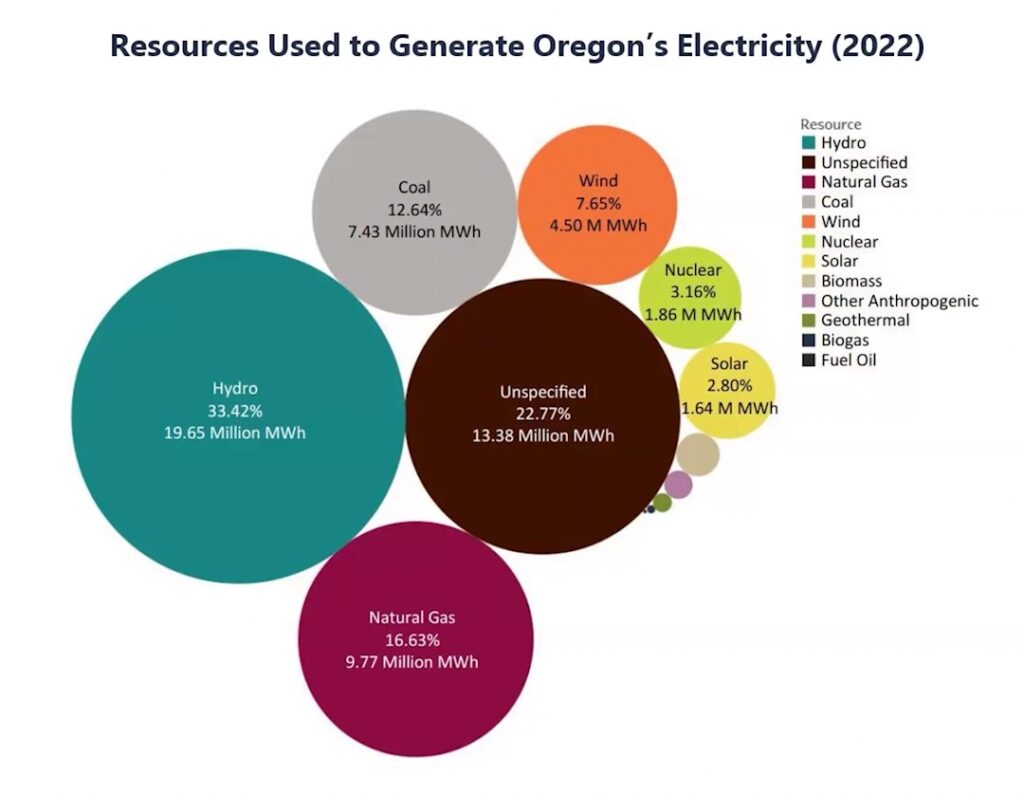
- Oregon sources energy from a mix of in-state renewables (hydro, wind, biomass) and imported fossil fuels.
- Electricity generation is changing with coal being phased out by 2030, replaced by a blend of renewables and natural gas.
- Transportation remains the largest energy-consuming sector in Oregon.
2. Energy Costs Are Rising — And That’s a Big Concern
- Residential electricity rates increased from 10.5¢ to 13.5¢ per kWh (2020–2024).
- Drivers include rising power purchase costs, aging infrastructure, inflation, and wildfire mitigation.
- Although Oregon still ranks below the national average, 28.4% of households are energy-burdened, especially in rural areas.
3. Resilience and Reliability Are Emerging Priorities
- The state is prioritizing resilient infrastructure, including underground lines and backup power.
- Local and statewide plans (like the Energy Security Plan and the Oregon Energy Strategy) are focused on preparing for natural disasters, climate events, and increased demand.
4. NW Natural Stressed the Role of Gas in the Transition
- Natural gas delivers reliable, high-efficiency energy, especially during peak demand when electricity struggles.
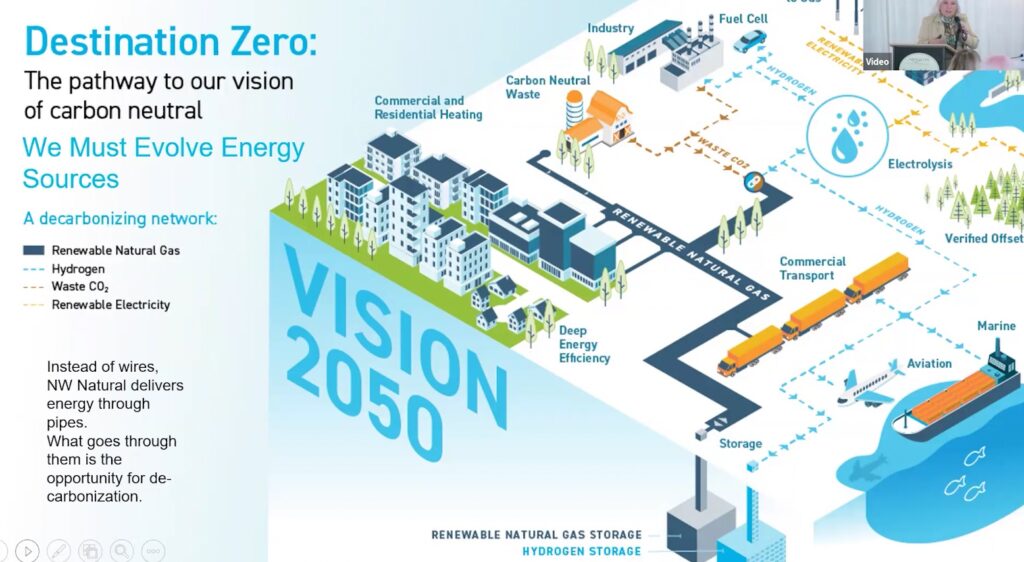
- NW Natural is investing in renewable natural gas (RNG) and hydrogen blending to decarbonize their system without replacing existing infrastructure.
5. Electric Grid and Data Centers Are Front of Mind
- Data centers are driving up electricity demand and raising equity concerns about who pays for upgrades.
- Technologies like “reconductoring” are being explored to increase capacity on existing lines without new construction.
6. Decarbonization Through Innovation
- Both speakers emphasized incremental innovation over sweeping bans. New tech like RNG, hydrogen blending, and carbon capture are central to keeping energy reliable and affordable while reducing emissions.
7. Bipartisan Messaging on Choice and Planning
- NW Natural encouraged attendees to speak to local elected officials about preserving energy choice.
- The forum emphasized that all fuel types will be needed in the future mix, and Oregon is actively modeling energy pathways to 2050.
Key Topics & Speaker Highlights
Mary Kopriva
Economist, Oregon Department of Energy
Overview of Oregon’s Energy Use
- Mary opened by introducing the Oregon Department of Energy’s mission to help Oregonians make informed decisions about energy.
- She presented highlights from the 2024 Biennial Energy Report, explaining that the report is divided into four key areas: energy data, emerging technologies, energy policy primers (“101s”), and agency updates.
Oregon’s Energy Profile
- Oregon imports a substantial amount of energy, much of which is fossil-fuel based.
- In-state production is dominated by renewables, especially hydro, wind, and biomass.
- Transportation accounts for the largest share of energy consumption in the state at 36.7 percent, followed by industrial, residential, and commercial sectors.
Energy Trends and Costs
- While overall energy use has remained flat, per capita energy use has decreased, indicating improved efficiency.
- Residential electricity rates rose from 10.5 cents to over 13.5 cents per kilowatt-hour between 2020 and 2024.
- Oregon’s average rates are still lower than the national average, but rates vary significantly by region.
Key Drivers of Rising Electricity Rates
- Rising wholesale power costs and fuel prices.
- Grid infrastructure investments and inflation-related cost increases.
- Wildfire and extreme weather mitigation efforts.
- She noted that House Bill 2021 (requiring 100% clean electricity by 2040) was not yet a direct cause of rate increases, but will likely impact future rates.
Energy Resilience
- Defined energy resilience as the system’s ability to recover from major disruptions.
- Discussed infrastructure improvements like underground power lines, localized resilience centers, and backup energy systems.
- Shared updates on the Energy Security Plan and the ongoing Oregon Energy Strategy, including modeling future scenarios through 2050.
Nina Carlson
Government Affairs Manager, NW Natural
Role and Reach of NW Natural
- Nina explained that NW Natural serves about half the state’s population with one of the most modern, efficient gas systems in the nation.
- Gas is used in 90 percent of homes built today in Oregon for space and water heating.
Efficiency and Reliability
- Unlike electricity, natural gas is delivered with very little energy loss (over 90 percent efficiency).
- The gas system supports high energy demand during cold snaps and dark periods when solar and wind energy may not be sufficient.
Natural Gas Cost Stability
- Despite infrastructure investments, the overall gas bill for residential customers is roughly the same as it was 15 years ago due to reduced commodity costs.
- Residential customers of NW Natural account for only about 5 percent of the state’s greenhouse gas emissions.
Innovation and Decarbonization
- NW Natural is investing in:
- Renewable Natural Gas (RNG), captured from landfills and wastewater facilities.
- Hydrogen blending, using excess renewable electricity to produce hydrogen, which can be stored and blended into the natural gas supply.
- Methane pyrolysis, a new technique that separates methane into usable hydrogen and carbon solids.
- The company is piloting these technologies at its Sherwood Training Center and near Portland.
Legislative and Consumer Engagement
- Nina emphasized the importance of maintaining energy choice for consumers.
- Urged attendees to contact local officials and advocate for balanced approaches to energy policy.
- Acknowledged legislation in Salem aimed at banning natural gas in new construction, which NW Natural opposes.
Expanded Q&A: Key Audience Questions
Q1: How are we going to make up for the loss of coal? How is wood converted to electricity?
Mary Kopriva:
- It will be up to electric utilities to determine how to meet electricity needs as coal is phased out.
- Natural gas will likely play a part, along with increased solar and wind—either produced in-state or imported.
- Longer-term, emerging technologies like geothermal may become more viable.
Nina Carlson (on gas supply):
- NW Natural’s storage facilities allow it to buy gas when market prices are low and store it for later use, which helps mitigate costs.
Q2: Does Canada have an effect on the supply and price of gas in the Northwest?
Nina Carlson:
- Yes. Approximately 67% of NW Natural’s gas supply comes from the Alberta region.
- If current tariffs remain in place, there will be impacts.
- NW Natural’s storage capacity can help lessen the impact of price changes.
Q3: Does NW Natural have storage capacity in the southern part of the state?
Nina Carlson:
- NW Natural operates a pressurized system that moves gas to where it’s needed.
- It has a liquid natural gas storage facility in Newport and another at the Portland critical energy hub.
- These facilities help with supply, especially at the system’s outer edges.
- If exposed to air, natural gas evaporates, which reduces long-term environmental impact during events like earthquakes.
Q4: Is the “fusion” mentioned in the Biennial Energy Report nuclear fusion?
Mary Kopriva:
- She deferred to technical experts at ODOE for that detail, indicating she did not have the specific answer at the time.
Nina Carlson (on nuclear energy):
- Currently, Oregon law does not allow nuclear facilities due to the legacy of the Trojan plant.
- There is legislation in Salem for a pilot project involving nuclear energy.
- Small modular nuclear reactors, developed by a Tigard company using Oregon State University research, are being discussed.
Q5: How do new data centers impact electricity rates?
Mary Kopriva:
- Acknowledged data centers are increasing demand, which contributes to rate pressure.
- Mentioned reconductoring as a technology being modeled in Oregon’s Energy Strategy. It can increase capacity on existing transmission lines by up to 50% without new construction or permitting.
Nina Carlson:
- Emphasized that increased electricity demand from data centers affects the system, and removing any energy source (like natural gas) would strain the grid.
- Stated that all energy sources are needed to meet current and future demand.
Q6: Are conductors being considered to increase electricity transmission without new lines?
Mary Kopriva:
- Yes. Re-conductoring is being studied as part of Oregon’s long-term energy strategy. It allows for more efficient use of existing transmission infrastructure.
Q7: What happened in 1989 that caused a drop in Oregon’s energy use?
Mary Kopriva:
- That year marked a significant transition from fuel oil and wood heating to more widespread use of natural gas, made possible by new infrastructure and availability.
Nina Carlson:
- Added that today, 80–90% of new homes use natural gas, particularly for space and water heating.
- Noted strong demand for natural gas backup generators in homes due to reliability during power outages.
Q8: Will the NW Natural presentation also be shared with the Oregon Legislature?
Nina Carlson:
- NW Natural does regularly speak with legislators to raise awareness, but as a utility, they are viewed as paid lobbyists.
- Encouraged attendees to speak directly to city councils and elected officials to express their energy preferences and advocate for informed decision-making.
Q9: What about fracking and its environmental impact, particularly water and chemicals?
Nina Carlson:
- Methane emissions from this supply chain are reportedly under 0.5% annually.
- NW Natural does not extract gas in Oregon.
- Their supply comes from a consortium called One Future, which enforces strict emission standards and best available technologies to minimize environmental impact.
Conclusion
The forum offered a valuable look at the evolving energy landscape in Oregon, with a clear message: meeting future demand will require innovation, collaboration, and a balanced approach. As state agencies and utilities plan for the decades ahead, local voices and informed engagement will play a vital role.
Thank you for reading! Share this post and help keep Oregon City businesses informed. Also consider coming to our next Oregon City Business Alliance Forum. If you agree with the mission of the OCBA consider becoming a member.